Exhausted Body, Relentless Schedule: Here’s How Athletes Recover Faster
For an athlete, fatigue is often not an option. Training must go on, schedules keep moving, and targets cannot be postponed. There are days when the body feels heavy, muscles have not fully recovered, yet the next training session is already ahead. This pattern has now also become part of an increasingly active urban lifestyle, where many individuals in Indonesia make exercise a routine, but face issues such as prolonged muscle soreness, fatigue that comes too quickly, and a body that is not ready to return to activity or training the next day—even when training programs are carried out regularly and in a structured manner.
These conditions are generally not caused by a lack of training, but by a recovery process that is not yet optimal. Intense physical activity triggers muscle tension, nervous system fatigue, and mild inflammation in body tissues. Without proper recovery strategies, this physical stress accumulates and affects performance, training consistency, and injury risk. Therefore, recovery must be positioned as a core strategy, not a complement—through body-based assessments, targeted interventions, and structured recovery programs to maintain performance and long-term physical sustainability.
Recovery from a Sports Medicine Perspective
In sports medicine, recovery is more than just rest. It involves complex biological processes that engage the muscular system, blood circulation, metabolism, and the body’s hormonal responses. When recovery is not optimal, the risks of prolonged fatigue, low-grade inflammation, and even performance decline increase.
According to dr. Nahum, Dipl. CIBTAC, Sp.K.O., a sports medicine specialist and graduate of Universitas Indonesia (Jakarta) who practices at Seraphim Medical Center, Paramount Gading Serpong, recovery is a crucial phase of the entire training cycle.
“Without a proper recovery phase, the muscle adaptation and performance improvements we expect from training can actually be hindered. Medically planned and monitored recovery helps the body become ready again for the next session,” explained dr. Nahum.
Infrared Sauna: Therapeutic Heat for Muscle Recovery
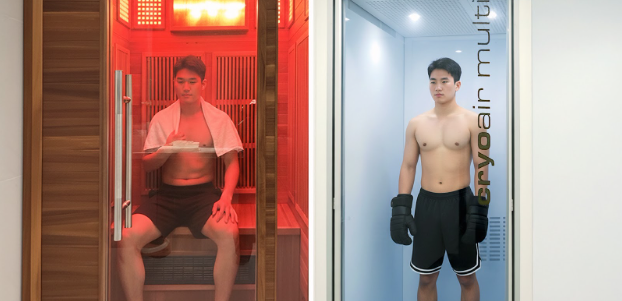
Infrared sauna is a heat therapy that uses infrared waves to penetrate deeper into tissues than conventional saunas. This mechanism helps improve blood circulation, promotes muscle relaxation, and supports nutrient delivery to tissues experiencing tension.
In the context of post-exercise recovery, scientific studies show that infrared sauna sessions after training can reduce muscle soreness and support neuromuscular performance recovery, compared to passive rest alone. Infrared sauna can help:
- Promote blood and oxygen flow to muscle tissue
- Reduce muscle tension and support relaxation
- Support the perception of faster physical recovery
“Infrared sauna works by increasing deep tissue temperature, helping muscle relaxation and recovery after intense physical activity,” said dr. Nahum.
Cryotherapy: Cold Temperature for Inflammation Control
In contrast to heat therapy, cryotherapy involves short-term exposure to extreme cold temperatures to trigger physiological responses that support mild inflammation control and muscle pain reduction after training.
The benefits of cryotherapy have been widely studied and used for post-exercise recovery, particularly to help:
- Reduce inflammation and swelling
- Relieve muscle and joint pain
- Accelerate tissue recovery
- Support the body’s readiness for the next training session
According to dr. Nahum, cryotherapy is especially relevant for individuals with high training intensity or those in mild injury recovery phases.
“Cold exposure helps control inflammation and provides a natural analgesic effect. In sports contexts, cryotherapy is often used to accelerate recovery so the body can return to optimal function in a shorter time,” he explained.
Combining Infrared Sauna and Cryotherapy for Balanced Recovery
Applying both methods in an integrated way creates a balanced recovery approach—combining the relaxing effects of heat with the inflammatory control of cold. This allows the body to recover not only from muscle tension, but also from nervous system and metabolic responses after physical activity.
“There is no single method that fits everyone. The combination of heat and cold therapies can be tailored to individual needs, physical conditions, and fitness goals,” added dr. Nahum.
An Integrated Approach at Seraphim Medical Center
As part of the Sports & Rehabilitation Center services, Seraphim Medical Center offers an integrated medical approach to recovery and functional rehabilitation. Each program is designed personally based on comprehensive assessments, considering physical condition, activity demands, and individual performance goals. Within this system, various recovery modalities are applied in a targeted manner, including the use of infrared sauna and cryotherapy as part of an integrated recovery strategy.
This structured approach begins with a comprehensive evaluation of physical activity history, muscle and joint condition, sleep patterns, stress levels, and overall metabolic health. With this foundation, recovery is positioned not merely as short-term restoration, but as a sustainable strategy to maintain physical performance, prevent injury risk, and improve quality of life through proper, targeted, and medically supervised recovery processes.
“Recovery is not only for athletes. Anyone who is physically active, has physically demanding work, or wants to maintain fitness and quality of life can benefit from it—provided it is done with the right approach and under medical supervision,” concluded dr. Nahum.
About Seraphim Medical Center
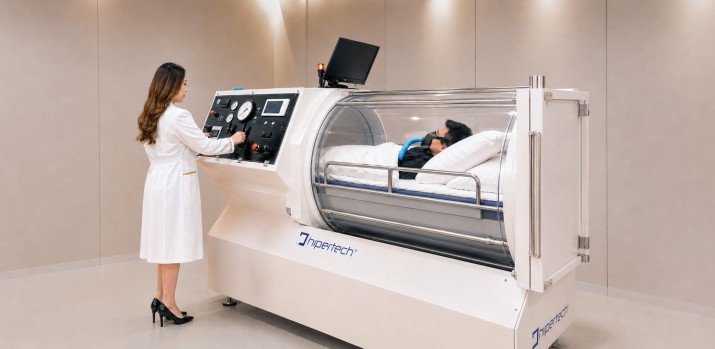
As a business unit of Bethsaida Healthcare, Seraphim Medical Center, located in Paramount Gading Serpong, features modern flagship facilities such as Cryo Chamber Therapy, TPS, Hyperbaric Oxygen Treatment, PicoWay Laser, Fotona Laser, and more. It delivers a functional medicine–based healthcare approach that focuses on root causes rather than merely treating symptoms. Seraphim Medical Center develops personalized medical services designed to help the body function more optimally—whether in maintaining health, supporting post-surgical recovery, or improving quality of life. Seraphim Medical Center has three main service pillars: Wellness Center, Beauty & Aesthetic Center, and Sports & Rehabilitation Center, which are integrated as part of a modern healthy lifestyle ecosystem.
Media Contact
Seraphim Medical Center
Gading Serpong, Tangerang
Related News
view all articles
Discover Brain Wellness & Sleep Center, Seraphim Medical Center's Newest Service

Di Tengah Sebaran Abu Vulkanik, Saatnya Perkuat Daya Tahan Tubuh dari Dalam
Waspada Dampak Abu Vulkanik pada Kulit, Masker Saja Tidak Cukup?