Ikut Pilates karena Tren? Kenali Dulu Bedanya dengan Rehab Pilates
When people first walk into a pilates studio, it's often because they saw it on TikTok or Instagram. The wave of pilates studios popping up across Jakarta reflects how this trend has captured the interest of beginners, drawn in by the graceful movements, the strong-looking bodies, and the aesthetic studio atmosphere. Many newcomers end up making pilates part of their lifestyle. But quite a few quietly continue dealing with the same issues: back pain, posture that hasn't really changed, or other long-standing physical complaints that linger in the background of daily life. This isn't because pilates doesn't work, but because there's a type of pilates designed for a different purpose. One is for those who want a stronger, fitter body. The other is for those who want their body to function the way it's supposed to again. Both are pilates, but the underlying approach is fundamentally different. The second type is known as Rehab Pilates.
When Pilates Becomes a Lifestyle
It's not an exaggeration to call pilates one of the sports that most defines urban lifestyle today. Studios are popping up across the city, classes are full, and pilates content continues to dominate social media feeds. The benefits for fitness, posture, and everyday movement quality are already being felt by many people directly. But there's a side of pilates that doesn't make it into much social media content—the side that's actually closest to the reason pilates was created in the first place.
Before It Went Viral, Pilates Was a Method of Healing
Long before pilates appeared on social media feeds, it was already being used as a recovery tool. Joseph Pilates created this method not for the aesthetics of the movements, but for a far more fundamental purpose: helping injured, limited, or suboptimally functioning bodies move correctly again. For decades, pilates lived and developed within the world of medical rehabilitation, used by physiotherapists and medical professionals to address injuries, chronic pain, and movement disorders. This is the version known as Rehab Pilates, and it's the version still working toward that same purpose today.
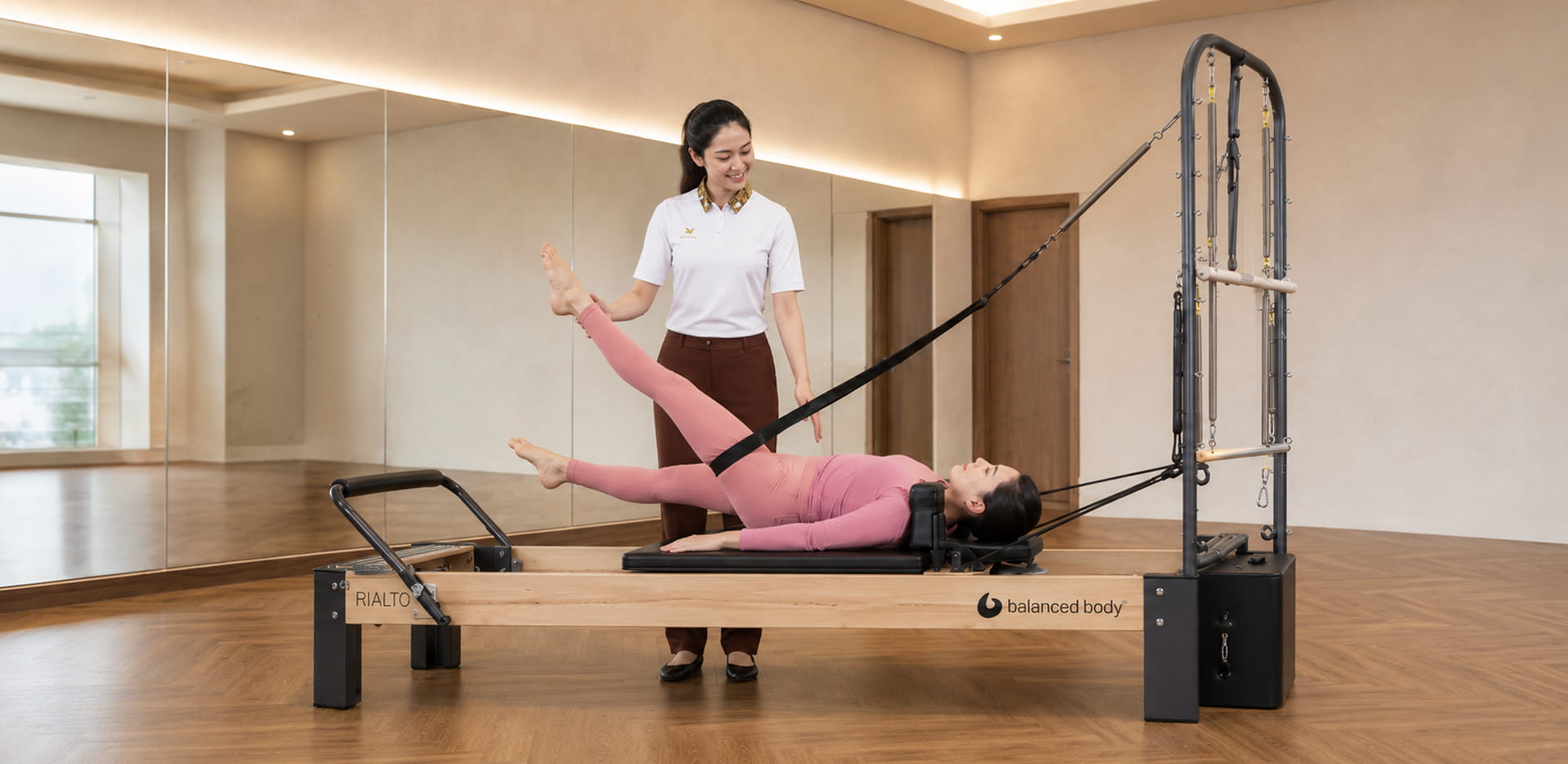
In Rehab Pilates, the main focus isn't how flexible or "neat" someone's movements look, but how the body can move more stably, with less pain, and return to functioning optimally in daily activities. That's why every movement is tailored to each individual's specific physical condition, with an approach that's more targeted, safe, and based on recovery needs.
What Sets Rehab Pilates Apart from Regular Studio Pilates?
The difference between Rehab Pilates and regular studio pilates isn't just about the movements performed, but about how the entire process is designed. In a typical pilates class, the program given is relatively the same for all participants, adjusted for skill level but not for specific medical conditions. In Rehab Pilates, everything starts with an assessment by a specialist, a deep understanding of the body's condition, injury history, complaints being experienced, and recovery goals to be achieved. From there, every movement is selected not because it looks good, but because the body—currently in the process of recovery—actually needs it. No two programs are the same, because no two bodies are in exactly the same condition.
Who Is Rehab Pilates Most Suitable For?
Rehab Pilates is designed for two groups that often come with different needs but both require more than just a regular class. For those already accustomed to doing pilates, Rehab Pilates becomes the solution when the results expected from studio pilates never quite materialize—complaints like pain that doesn't improve despite attending regularly, certain movements that always feel uncomfortable, or old issues that persist in between otherwise enjoyable sessions. This doesn't mean the pilates they've been doing is wrong, but rather that there's a condition requiring a more specific, medically structured approach.
For those just wanting to try pilates for the first time, Rehab Pilates can actually be a more appropriate starting point—especially for those coming in with physical complaints such as chronic back pain, knee or shoulder issues, scoliosis, posture that has worsened from too much time spent in front of a screen, or those who are in recovery after an injury or surgery. Starting with Rehab Pilates ensures the body moves the right way from the beginning, rather than learning incorrect movements that need to be corrected later.
Rehab Pilates at Seraphim Medical Center
At Seraphim Medical Center, Rehab Pilates is run entirely as a private session—one session, one patient, one medical professional fully focused on the condition and progress of the body being treated. There are no group classes and no one-size-fits-all movements. Every program begins with a thorough assessment of physical condition, complaint history, and recovery goals to be achieved. From there, each movement is specifically selected, not based on a standard curriculum, but based on what the body truly needs at that moment. As the condition improves, the program continues to be adjusted, because good recovery isn't about completing a certain number of sessions, but about ensuring the body truly returns to its optimal function.
Every session begins with a comprehensive physical condition assessment, conducted by medical professionals who understand not just pilates movements, but also anatomy and the specific recovery needs of each individual. The program is designed not based on a standard movement curriculum, but based on what the body truly needs—whether that's post-injury recovery, long-term postural correction, or addressing chronic pain that has long disrupted daily activities. Progress is monitored continuously and the program is adjusted as the body's condition improves, because the ultimate goal isn't finishing a set of sessions, but ensuring the body truly recovers.
Same Movements, Different Purpose
Viral pilates and Rehab Pilates aren't two opposing things. Both have their own place and purpose, and both can offer real benefits when chosen according to the right condition and need. What's important to remember is that not every body comes in the same condition, and not every condition can be addressed with the same approach. Understanding the difference between the two isn't about choosing which is better, but about choosing what's most appropriate for the body's current condition.
Want to know if Rehab Pilates is right for your body's current condition? Start with a consultation with the medical team at Seraphim Medical Center and discover a program designed specifically for your recovery needs.
Related News
view all articles
Endymed RF: Teknologi Radiofrekuensi untuk Kontur Tubuh Ideal
Sudah Rutin Olahraga, Tapi Badan Masih Pegal dan Recovery Terasa Lama? Ini yang Mungkin Tubuhmu Butuhkan
Tubuh Lebih Segar dan Bebas Kembung dengan Lymphatic Massage