The Fun of Training Your Brain by “Playing Games” with Neurofeedback
Imagine a therapy that looks like playing a game on a computer screen, but what is actually being trained is your brainwave activity. That is a simple picture of Neurofeedback, a technology-based therapy method now available at Seraphim Medical Center under the care of dr. Oktaviana Niken P., Sp.N., DAIFIDN., MMRS., FNR., AIFO-K.
What Is Neurofeedback?
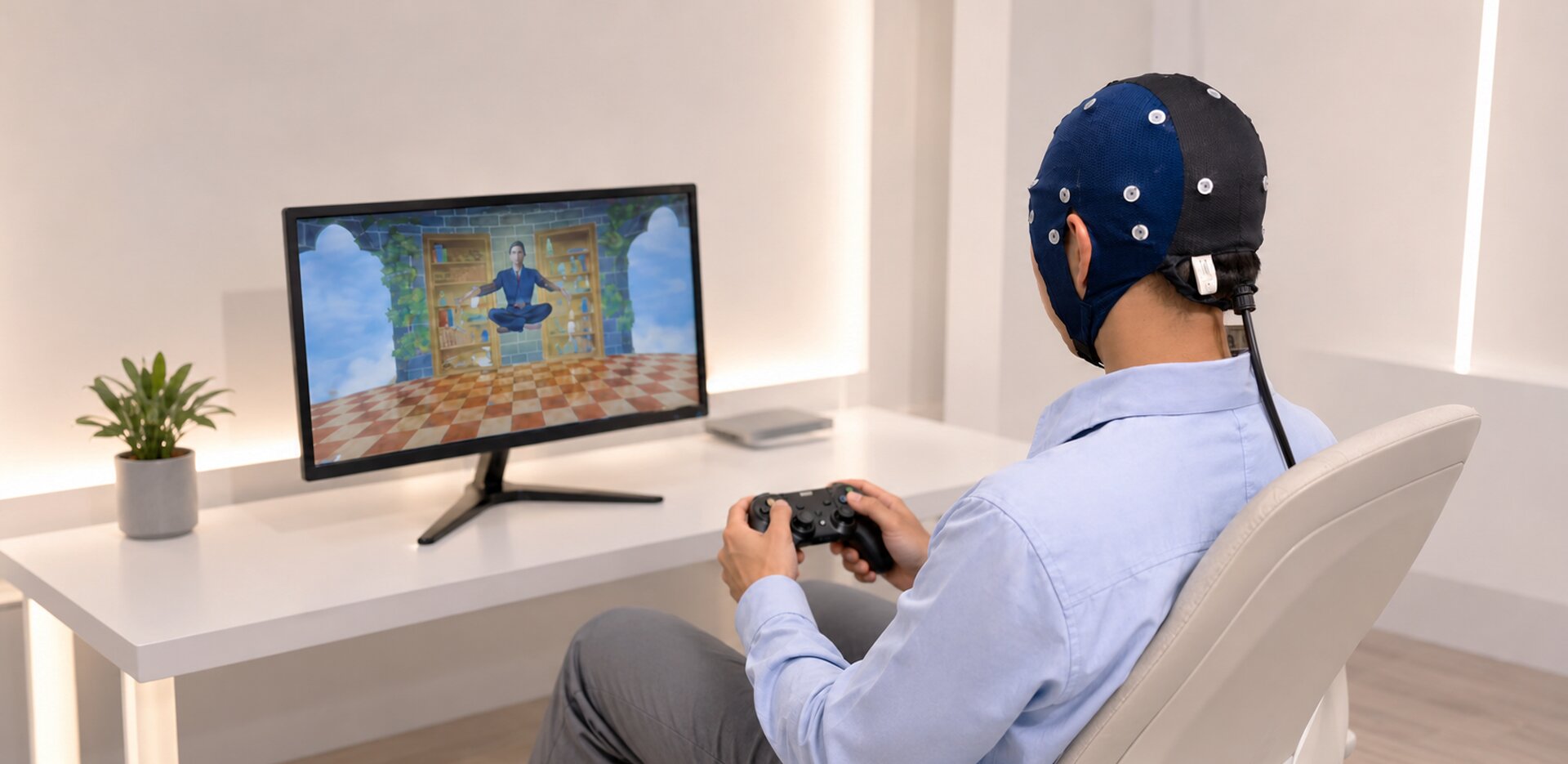
Neurofeedback is a non-invasive therapy technique that uses the principle of operant conditioning to train patients to recognize and regulate their own brainwave patterns in real time. It is a form of EEG biofeedback. The brain’s electrical activity is recorded through electrodes placed on the scalp, then shown back to the patient as easy-to-understand visuals or audio.
“Neurofeedback is essentially a way of training the brain to recognize its own patterns. Patients don’t need to understand complicated medical terms, because the information is translated into interactive visuals on the screen,” explained dr. Niken.
Why Does It Feel Like Playing a Game?
One thing that sets neurofeedback apart from other therapies is how the information is delivered. Instead of simply looking at numbers or static graphs, patients see visual elements on the screen, such as animated characters, videos, or simple games, that move or change based on the brainwave patterns being recorded.
During a neurofeedback session, patients enjoy various forms of visual stimulation, from games and karaoke to videos and films. When the brainwave pattern matches the therapy target, the display “rewards” the patient. For example, a game character moves upward, a video plays more clearly, or the music sounds clearer. Conversely, when the brainwave pattern moves away from the target, the display gives a different signal, such as the character stopping or the image dimming. This mechanism is called positive reinforcement, a principle also commonly used in game design to keep players engaged.
“The principle is indeed similar to the reward mechanism in games. The brain receives immediate feedback every time it shows the desired pattern. Because it is delivered visually and interactively, many patients, including children, feel more comfortable going through therapy sessions than with conventional methods,” said dr. Niken.
How Does the Process Work?
EEG Electrode Placement
Electrode sensors are placed on specific areas of the scalp to record the brain’s electrical activity (delta, theta, alpha, and beta waves) non-invasively and painlessly.
Brainwave Pattern Analysis
Before therapy begins, an initial mapping (usually through qEEG or brain mapping) is carried out to identify the patient’s brain activity patterns, so the therapy targets can be tailored to each individual.
Training Session with Visual Feedback
During the session, the patient sits in front of a screen and watches visuals that respond directly to their brain activity. This process is repeated over several sessions, with the aim of training the brain to maintain more desirable activity patterns.
Regular Progress Evaluation
The doctor monitors the patient’s progress from session to session to assess whether the brainwave patterns show consistent changes as therapy continues.
What Conditions Is Neurofeedback Used For?
Based on the medical literature, neurofeedback is most widely studied and used as a supportive therapy for the following conditions:
- ADHD (Attention-Deficit/Hyperactivity Disorder): one of the most researched areas, with several studies showing the potential benefits of neurofeedback in supporting improved attention. However, research results still vary, and some experts believe the quality of the evidence needs to be strengthened by further studies.
- Anxiety disorders and stress: as a supportive therapy to help regulate the stress response.
- Sleep disorders (insomnia): supporting improved sleep patterns in some patients.
- Recovery after mild brain injury (mild TBI): as part of a cognitive function rehabilitation approach.
- Cognitive function optimization: such as focus and concentration, in individuals without specific medical conditions.
“It is important to understand that neurofeedback is not a standalone treatment. We position this therapy as part of a more comprehensive approach, tailored to each patient’s examination results and needs,” emphasized dr. Niken.
Are the Results Instant?
The answer is “No.” Like learning a new skill, neurofeedback requires a repeated process over several sessions so the brain can “learn” to maintain the targeted activity patterns. The number of sessions needed varies from person to person, depending on the starting condition, the therapy goals, and each patient’s response to therapy.
“Neurofeedback works gradually, not instantly. Consistently attending sessions as recommended is an important factor that affects the final results,” added dr. Niken.
Is an Examination Needed Before Therapy?
Before starting neurofeedback, patients undergo an initial evaluation by a specialist doctor to make sure this therapy is suitable for their condition. This initial examination is important because every patient has different brainwave patterns and therapy needs.
“We don’t give neurofeedback right away without an evaluation. There is a brain activity mapping process first, so that the therapy targets we set truly match the patient’s condition,” explained dr. Niken.
Consult Your Needs
Neurofeedback offers an interactive, non-invasive brain therapy approach that is easy to follow thanks to its game-like display on a computer screen. However, the suitability and results of the therapy still need to be evaluated first by a specialist doctor. Consult your condition with dr. Oktaviana Niken P., Sp.N., DAIFIDN., MMRS., FNR., AIFO-K. at Seraphim Medical Center to get an assessment and a therapy plan that fits your needs.
About Seraphim Medical Center
As a business unit of Bethsaida Healthcare, Seraphim Medical Center, located in Paramount Gading Serpong with modern flagship facilities such as Cryo Chamber Therapy, TPS, Hyperbaric Oxygen Treatment, PicoWay Laser, Fotona Laser, and more, brings a functional-medicine-based approach to health that focuses on root causes, not merely on treating symptoms. Seraphim Medical Center develops medical services designed personally to help the body function more optimally, whether in maintaining health, supporting post-surgery recovery, or improving quality of life. Seraphim Medical Center’s flagship services are the Wellness Center, the Beauty & Aesthetic Center, and the Sports & Rehabilitation Center, which are integrated as part of a modern healthy lifestyle.
Related News
view all articles
Why Should a Diet Be Supervised by a Clinical Nutrition Doctor?
When Is the Right Time for a Facial?
A Parkinson’s Patient’s Story from Malaysia: A Journey in Search of Treatment That Led to Seraphim