Acne After Staying Up Late? Understand the Link to Sleep Quality and the Support of ExoMind
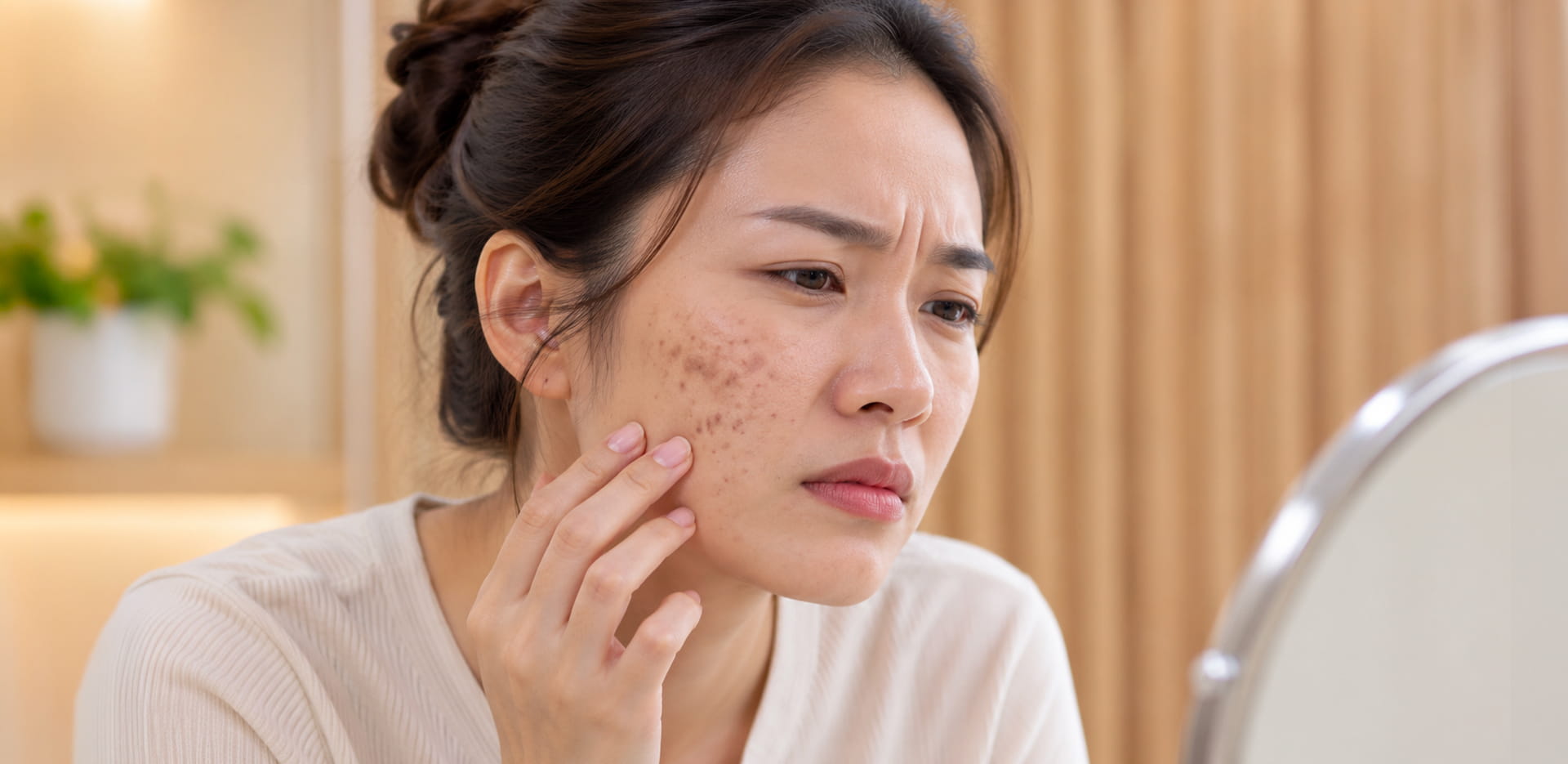
Ever felt like acne suddenly appears after a few nights of poor sleep, even though your skincare and diet haven’t changed? Many people experience this, and it is not just a coincidence. Sleep quality and stress affect skin condition, especially in skin that is already prone to acne.
At Seraphim Medical Center, the approach to skin does not stop at surface care. Besides aesthetic treatments, there is also ExoMind, a non-invasive brain stimulation therapy that can support stress management and sleep quality as a complement to a healthy lifestyle. This link between sleep, the brain, and skin is discussed from two sides: dr. Silvia Kartika from the aesthetic side and dr. Oktaviana Niken P., Sp.N, DAIFDN, MMRS, FNR, AIFO-K from the neurology side.
“Many patients come with recurring acne, then only realize their sleep pattern has been a mess. Skin is a reflection of the body’s condition, so sleep quality and stress can’t be ignored in skin care,” explained dr. Silvia Kartika.
Why Can Lack of Sleep Trigger Acne?
Acne is generally caused by a combination of factors, such as excess oil production, clogged pores, bacteria, inflammation, and hormones. Lack of sleep and stress are not the sole cause, but they can help make the condition worse.
When the body is under-rested or under pressure, stress hormones such as cortisol can rise. This can affect oil gland activity, trigger inflammation, and make the skin slower to recover. As a result, acne-prone skin can become inflamed more easily and take longer to improve.
“Lack of sleep and stress are not the only causes of acne, but they can be a trigger or can worsen existing acne. That is why I often ask patients about their sleep habits during consultations,” added dr. Silvia Kartika.
From the Neurology Side: What Happens in the Brain When You Lack Sleep?
To understand why sleep matters so much, we need to look at what happens in the brain. Sleep is not just “switching off” the body. During sleep, the brain goes through various important processes, including resetting its response to stress and balancing emotions. When sleep is disrupted, the brain’s stress response system can become more easily activated, and the effects are felt throughout the body, including the skin.
“The brain and body have interconnected stress response systems. If sleep is lacking or not restful, this system tends to be more easily activated, so stress hormones can stay high. From the neurology side, that is why sleep quality and stress need to be looked at together, not separately,” explained dr. Niken.
Many people assume the problem is only sleep duration. In fact, long sleep is not necessarily good-quality sleep. A mind that stays active, anxiety, or the habit of staring at a screen late into the night can make sleep feel shallow and less refreshing.
“Patients often say, ‘I sleep 7-8 hours but I’m still tired.’ That can mean the quality of sleep needs to be assessed, not just its length. A mind that is hard to ‘switch off’ because of stress is often one of the factors,” added dr. Niken.
For that reason, if sleep complaints last a long time, an evaluation by a doctor can help. At the Brain Wellness & Sleep Center, the assessment can be complemented with tests such as qEEG Brain Mapping if the doctor considers it necessary.
Signs Your Skin Is Affected by Sleep Quality and Stress
- Acne appears more often or takes longer to heal
- Skin looks dull and less fresh
- Skin feels more sensitive or irritated more easily
- Skin is oilier than usual
- Eyes look tired with dark circles
Other factors such as hormones, genetics, the products used, and diet also play a role. That is why an assessment by a doctor is still necessary.
Getting to Know ExoMind: Support from the Brain’s Side
ExoMind is a repetitive Transcranial Magnetic Stimulation (rTMS) therapy with ExoTMS™ technology. The process is non-invasive: no surgery, no incisions, and no medication. Magnetic pulses are directed at a brain area called the DLPFC (Dorsolateral Prefrontal Cortex), which plays a role in emotion regulation and cognitive function. Repeated stimulation can help modulate neural network activity through a process called neuroplasticity. At Seraphim, ExoMind is positioned to support stress management, emotion regulation, focus, and optimization of sleep quality.
“The DLPFC can be imagined as the part of the brain that helps us regulate emotions and make decisions. ExoMind stimulates this area non-invasively as one way to support its function. The results of course differ from person to person, and it works best when combined with good sleep habits and stress management,” explained dr. Niken.
It is important to understand that ExoMind is not an acne therapy and is not designed to treat skin problems directly. Its role is to support the internal factors that also influence skin condition.
“ExoMind is not a replacement for acne treatment. For the acne itself, we still treat it according to the skin’s condition, from skincare to appropriate treatments. ExoMind can be a complement for patients whose sleep and stress also affect their skin,” emphasized dr. Silvia.
Frequently Asked Questions about ExoMind
Is this therapy painful?
ExoMind is non-invasive, with no incisions. Patients undergo the session sitting or lying down comfortably. A light tapping sensation on the scalp is usually felt and a clicking sound from the magnetic pulses is heard. Some people may feel mild discomfort on the scalp or a temporary headache.
Is medication needed?
This therapy is performed without medication. However, do not stop or change any medication without consulting your doctor.
Can I go straight back to activities afterwards?
ExoMind uses a walk-in & walk-out concept. Even so, some people may feel temporarily dizzy or tired, so tell your doctor how you feel after the session.
How long is one session, and how many are needed?
One session lasts about 24.5 minutes. The protocol is generally a minimum of 4-6 sessions at a frequency of 2-3 times a week, following the clinical evaluation and the doctor’s recommendation.
Is there an examination before therapy?
Yes. The doctor will ask about complaints, medical history, seizure history, surgeries, and medications to make sure ExoMind is safe and suitable. The doctor will also monitor the response regularly and adjust the plan as needed. “We don’t start therapy without an evaluation. The doctor needs to make sure first whether ExoMind is safe and suitable for the patient, then monitor the response over time,” said dr. Niken.
Are the results instant?
No. Results differ from person to person and depend on the starting condition, the number of sessions, and daily sleep habits and stress management.
Is it safe for everyone?
No. Patients with implants sensitive to magnetic fields, metal in the head area, or a history of epilepsy/seizures need strict evaluation or are not recommended to undergo this therapy. Details are in the next section.
Tips for Keeping Sleep and Skin Healthy
- Sleep and wake at consistent times
- Limit device screens for one hour before bed
- Cleanse your face before bed and don’t sleep with makeup on
- Change pillowcases regularly
- Manage stress through light exercise, deep breathing, or calming activities
- Consult a doctor about acne that doesn’t improve, and don’t pick at it
Consult Your Skin and Sleep Condition
Healthy skin is cared for from the outside and from within. If your acne often flares up and your sleep pattern is a mess, consult dr. Silvia Kartika for a skin assessment, and dr. Oktaviana Niken P., Sp.N, DAIFDN, MMRS, FNR, AIFO-K at the Brain Wellness & Sleep Center for a sleep and stress evaluation, at Seraphim Medical Center.
If you experience severe complaints, such as prolonged feelings of hopelessness or thoughts of harming yourself, seek help from a mental health professional immediately or contact the nearest emergency service.
About Seraphim Medical Center
As a business unit of Bethsaida Healthcare, Seraphim Medical Center, located in Paramount Gading Serpong with modern flagship facilities such as Cryo Chamber Therapy, TPS, Hyperbaric Oxygen Treatment, PicoWay Laser, Fotona Laser, and more, brings a functional-medicine-based approach to health that focuses on root causes, not merely on treating symptoms. Seraphim Medical Center develops medical services designed personally to help the body function more optimally, whether in maintaining health, supporting post-surgery recovery, or improving quality of life. Seraphim Medical Center’s flagship services are the Wellness Center, the Beauty & Aesthetic Center, the Sports & Rehabilitation Center, and the Brain Wellness & Sleep Center, which are integrated as part of a modern healthy lifestyle.
Related News
view all articles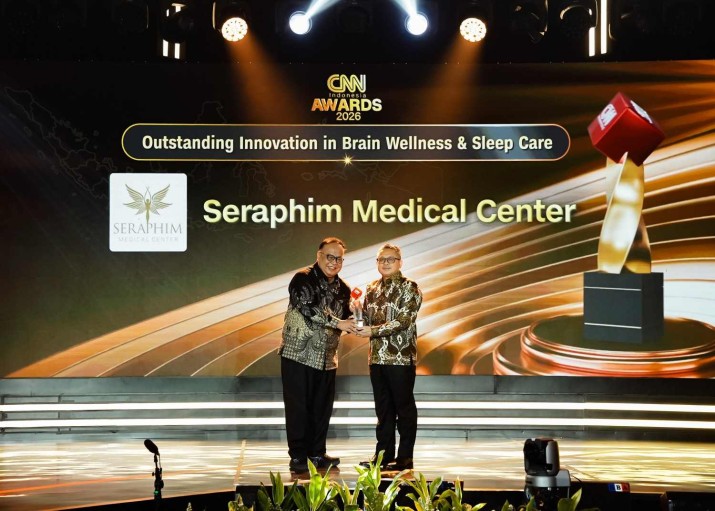
Seraphim Medical Center Honored at CNN Indonesia Awards 2026 for Sleep Center Innovation

Discover Brain Wellness & Sleep Center, Seraphim Medical Center's Newest Service

Di Tengah Sebaran Abu Vulkanik, Saatnya Perkuat Daya Tahan Tubuh dari Dalam